

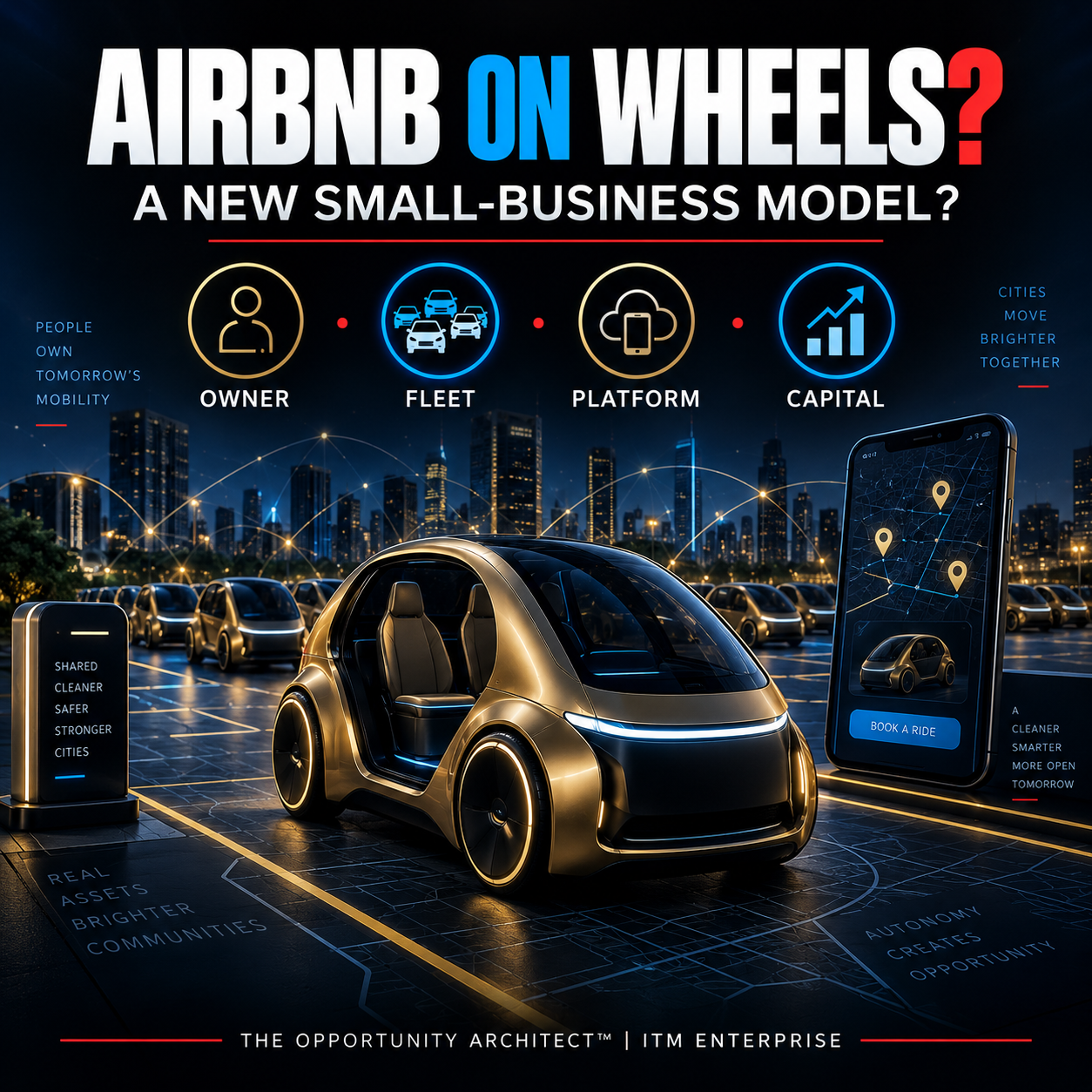
Elon Musk has described Tesla’s future customer-owned Robotaxi network as an “Airbnb on wheels.” The phrase immediately creates a powerful picture. Instead of leaving a vehicle parked most of the day, an owner could place it into Tesla’s network and earn revenue while it transports passengers.
That vision has returned to the spotlight as Tesla expands Robotaxi service and collects interest from people and businesses considering future Cybercab fleet purchases. It could create a new category of business ownership. It could also require far more work, capital, and risk management than the words “passive income” suggest.
The real question is not whether the idea sounds exciting. The question is what an entrepreneur would need to operate it as a real business.
What Elon Musk actually said
During Tesla’s July 2024 earnings call, Musk explained that a future customer-owned fleet could allow Tesla owners to place their vehicles into the Tesla network, remove them when needed, and share ride revenue with Tesla. He compared the system to Airbnb because privately owned assets could become available through a larger platform.
Review the July 2024 earnings-call transcript.
Musk also discussed Tesla-owned vehicles operating inside the same network. That part of the model would be closer to a traditional transportation company that owns its fleet.
The viral statement that owners can “make money in their sleep” is a social-media interpretation. It should not be presented as a verified direct quote from Musk. Tesla has not guaranteed passive income or published dependable customer-owner earnings.
Where the $30,000 number came from
At Tesla’s October 2024 Cybercab unveiling, Musk said Tesla expected the vehicle’s cost to be below $30,000. That was an expectation, not a final customer invoice or financing offer.
Watch Tesla’s official We, Robot Cybercab unveiling.
A buyer would still need the final delivered price, taxes, registration costs, commercial insurance requirements, network fees, and financing terms. The price of the vehicle is only one part of the investment.
Why the Airbnb comparison is powerful but incomplete
Airbnb connects privately controlled properties with customers through a larger marketplace. Tesla’s proposed network could connect privately owned autonomous vehicles with passengers in a similar way.
But a vehicle is not a spare bedroom. It moves through public streets, accumulates mileage quickly, carries passengers without an owner present, and creates transportation and liability risks.
A Cybercab business may require:
- Commercial insurance and clear liability coverage
- Charging, cleaning, inspections, and vehicle storage
- Tire replacement, repairs, and maintenance reserves
- Customer support and incident response
- Permits, registrations, and local transportation compliance
- Technology monitoring and vehicle recovery procedures
- Cash reserves for downtime and delayed revenue
That is not completely passive. It is an operating business built around a revenue-producing asset.
Three business models could emerge
1. The single-vehicle owner
An individual could purchase one Cybercab and make it available when the vehicle is not needed. This would have the lowest entry cost, but one repair or insurance problem could stop all revenue.
2. The microfleet operator
An entrepreneur could manage five, ten, or more vehicles. A larger fleet could spread risk across multiple assets, but it would also require more capital, parking, charging capacity, cleaning, administration, and operating reserves.
3. The fleet-services business
Some entrepreneurs may never own a Cybercab. They could provide charging, cleaning, storage, maintenance, dispatch support, or fleet-management services to vehicle owners. In many emerging industries, the companies supporting the asset owners can become as important as the owners themselves.
What Tesla has confirmed today
Tesla’s current Robotaxi information lists service in limited areas of Miami, Orlando, Tampa, Austin, Dallas, and Houston. The current fleet includes Model Y and Cybercab vehicles.
Tesla’s second-quarter 2026 update discusses decisions between selling vehicles to customers and placing vehicles in Tesla’s owned and operated fleet. However, Tesla has not published a complete agreement showing customer-owner payouts, platform fees, minimum utilization, priority rules, or guaranteed revenue.
What a lender would want to know
A lender is unlikely to approve a fleet simply because the concept is popular. The lender may review the borrower’s credit, available cash, business experience, projected cash flow, insurance, collateral value, operating plan, and reserves.
Before committing capital, an entrepreneur should obtain written answers to these questions:
- What is the final delivered Cybercab price?
- Can privately owned Cybercabs enter the network in the target city?
- How will Tesla calculate fares, fees, and owner payouts?
- Who carries liability when the vehicle is operating without an owner?
- How much downtime should be expected for charging, cleaning, and repairs?
- Can the lender secure and repossess a vehicle without traditional controls?
- How much working capital is needed before the fleet becomes stable?
The Opportunity Architect’s view
Cybercab could become a new small-business model. The strongest opportunity may not be limited to owning the vehicles. It could include financing, fleet management, charging locations, maintenance, insurance, and other support services.
The entrepreneur’s job is to separate the vision from the operating agreement. First confirm the rules. Then build the financial model, capital plan, and risk controls.
Our earlier analysis, Can Five Tesla Cybercabs Really Produce $100,000 a Year?, explains why viral profit calculations should be tested before money is committed.
ITM Enterprise helps entrepreneurs evaluate capital readiness for eligible commercial vehicles, equipment, acquisitions, and other revenue-producing assets. Schedule a capital strategy conversation with Travis Toussaint, The Opportunity Architect™.
Important: This article is educational and does not provide investment, legal, tax, or financial advice. Cybercab availability, network eligibility, earnings, purchase pricing, and financing are not guaranteed. Financing remains subject to lender eligibility, documentation, underwriting, collateral, and approval.